
What Professional Cleaners Notice in Your Home Within 30 Seconds

A professional cleaner does not need to open every cupboard to understand a home. Within half a minute, they have already gathered clues from the hallway, the air, the floor, the surfaces, and the way the rooms are used.
That does not mean they are judging. Good cleaners see homes in a practical way. They notice what will take time, what needs careful handling, what is likely to be missed, and what kind of clean will make the biggest difference.
The useful part is this: once you know what they spot first, you can make your home feel cleaner faster. You can also make a paid clean more effective, because the cleaner can spend less time working around clutter and more time on the work that actually changes the space.

The first impression starts at the front door
The entrance is the first working area in a home. It carries outdoor dirt, wet footprints, pet hair, post, shoes, bags, and coats. A cleaner will notice whether this area is just lived-in or whether it is spreading grime further into the house.
They will usually spot:
Dirt gathered around the doormat
Mud or grit at the base of the door
Shoes carrying debris onto hard floors or carpets
Finger marks on the door, handles, and light switches
Dust along skirting boards near the entrance
A hallway can look fairly tidy at eye level while still needing a lot of attention at floor level. Professional cleaners often scan downwards quickly, because floors tell the story of how dirt moves through the home.
A small change makes a big difference here. Shake out the mat, line up the shoes, and clear bags from the floor before a clean. That gives immediate access to the areas that need sweeping, vacuuming, or mopping.
What matters most is access. A cleaner cannot properly clean under a heap of school bags or behind a pile of trainers without spending time moving everything first.
They notice the smell before the surfaces
Scent is one of the fastest clues in any home. Cleaners are trained, informally or through experience, to separate “normal home smell” from signs of hidden work.
Common sources stand out quickly:
Bins that need emptying or washing
Damp towels or laundry
Pet bedding
Food smells in the kitchen
Musty air from poor ventilation
Drains that need attention
A scented candle or air freshener may make a room smell nicer for a while, but it rarely hides the source. A professional cleaner will usually look for the cause rather than the cover-up.
The quickest improvement is fresh air. Open windows for ten minutes if the weather allows. Empty bins, remove food waste, and put damp laundry somewhere it can dry. If there is a pet bed, shake it outside or put the cover in the wash.
This is one of the most common things that professional cleaners notice in your home within 30 seconds, because scent gives useful information before any task begins.
Clutter changes the whole clean
Clutter is not dirt, but it affects how clean a home can get.
A room can be hygienic and still look messy if surfaces are covered. A room can also look tidy but hide dust because everything has been pushed to the edges. Cleaners notice the difference quickly.
The most time-consuming items are usually small, loose things:
Coins
Receipts
Toys
Hair clips
Toiletries
Chargers
Post
Random items on kitchen worktops
None of these is a problem on its own. The issue is that every item must be moved, cleaned around, or avoided. That slows the job down and increases the chance that dust remains underneath.
If you are preparing for a cleaner, do not spend all your energy scrubbing. Spend a short amount of time clearing surfaces first. Put loose items into baskets, trays, drawers, or a single “sort later” box.
A clear surface lets a cleaner clean. A covered surface asks them to organise, decide, and guess where things belong.

Floors reveal more than people think
Floors show daily habits. Cleaners will notice traffic paths, crumbs, dust bunnies, pet hair, sticky marks, and the areas that have not been reached for a while.
In carpeted rooms, the signs are often:
Flattened areas where people walk most
Dust at the edges
Hair caught near furniture legs
Crumbs around sofas and dining chairs
On hard floors, cleaners may notice:
Smears from previous mopping
Grit underfoot
Sticky patches near the kitchen
Dust gathered in corners
Marks around chair legs
The corners matter. Many people clean the centre of a room and miss the edges. Cleaners often look at corners, along skirting boards, and under radiators because those areas reveal the difference between a quick tidy and a proper clean.
If you want a room to look cleaner fast, clear the floor and vacuum or sweep right to the edges. A clean floor changes the feel of a room more than many people expect.
The kitchen tells them how the home is used
The kitchen can look calm from the doorway, then reveal plenty within a few seconds. Cleaners will scan the worktops, sink, hob, splashback, bin area, and handles.
They are not looking for perfection. They are looking for the type of cleaning needed.
A few clues stand out:
Grease on cupboard doors near the hob
Crumbs under the toaster
Water marks around the sink
Limescale on taps
Food splashes on tiles or glass
Sticky handles on cupboards, fridge doors, and microwaves
Overflowing recycling or food waste
The sink is a big signal. A shiny sink makes the kitchen feel cleaner, even if the rest is ordinary. A sink full of dishes makes cleaning harder, because the cleaner may not know what can be moved, washed, or left alone.
If someone is coming to clean, washing up or loading the dishwasher beforehand helps more than most people realise. It frees up the sink, clears the worktop, and lets the cleaner deal with grease, limescale, and surfaces.
Handles are easy to miss at home and easy to spot as a cleaner. They collect fingerprints, food residue, and general grime because everyone touches them every day.
Bathrooms give away the cleaning routine
Bathrooms reveal frequency. A cleaner can often tell whether a bathroom has been wiped often or only cleaned when it looks bad.
The common signs are straightforward:
Limescale around taps and shower screens
Soap scum on tiles
Dust on the toilet base
Hair near the drain
Toothpaste marks on mirrors
Water marks on chrome
Product build-up around shampoo bottles
In the UK, hard water can make limescale a regular battle in many homes. Cleaners know this, so they will not be surprised by chalky marks on taps or shower screens. They will notice whether the build-up is light and recent or heavy and layered.
The toilet area also gets a quick scan. Not just the bowl, but the base, hinges, flush button, and floor behind it. These spaces are easy to overlook during a rushed clean.
To make a bathroom feel fresher before guests arrive, focus on the mirror, basin, taps, toilet, and floor. Those areas change the impression quickly.

Dust patterns show what gets moved and what stays put
Dust is more honest than most surfaces. It shows airflow, habits, and forgotten zones.
Cleaners notice dust in places many people stop seeing:
Top edges of picture frames
Lampshades
Skirting boards
Window sills
Door frames
TV stands
Shelves around ornaments
Radiator tops
Behind headboards
They also notice “clean outlines”, where an object has sat for a long time and the area around it has been dusted. This leaves a clear shape beneath the item. It often happens with candles, ornaments, plant pots, and bathroom products.
This is not a moral failing. Most homes have objects that stay in the same place for months. The practical lesson is to move items now and then, even just for a quick wipe underneath.
Microfibre cloths help because they lift dust rather than pushing it around. For high dust, a damp cloth or suitable duster prevents the dust from falling straight onto the lower surfaces you just cleaned.
Pet hair is obvious even when the pet is not
Cleaners often notice pets before they see them. Hair gathers in predictable places: sofa edges, stair corners, rugs, bedding, curtains, and under furniture.
Pet homes can be beautifully clean, but they usually need a slightly different plan. Hair clings to fabric, floats into corners, and wraps around vacuum brush bars. Cleaners may also notice nose marks on glass, paw prints by doors, or crumbs around feeding areas.
The quickest fixes are simple:
Vacuum soft furnishings with the right attachment
Wash pet blankets often
Wipe the floor around food and water bowls
Keep a washable mat near the door
Brush pets regularly when possible
If you book a cleaner and have pets, it helps to mention this in advance. Some cleaners bring specific tools for hair, and some need to know about animals in the home for safety and comfort.
They spot the high-touch areas most people forget
High-touch areas are the parts of the home that hands meet all day. They can look fine from a distance but feel sticky or marked up close.
Cleaners often check:
Door handles
Light switches
Banister rails
Remote controls
Cupboard handles
Appliance buttons
Fridge and freezer handles
Chair backs
Kettle handles
These areas matter because they affect how clean a home feels. A room may be vacuumed and dusted, but if the light switch is grimy, the space still feels neglected.
A quick weekly wipe makes a visible difference. Use a suitable cloth and product for the material, especially around electrics. The goal is not to soak anything, just to remove fingerprints and residue.
The details around windows stand out
Natural light is unforgiving. When sunlight hits a room, smears, dust, and marks become much easier to see.
Cleaners notice window-related details within moments:
Fingerprints on glass doors
Dust on sills
Dead insects in tracks
Mould or mildew near frames
Water marks on glass
Dusty blinds or curtain tops
Patio doors and kitchen windows often show the most marks because people touch them often or splash them during cooking and washing up. Children and pets can also leave marks at lower heights, which adults may stop noticing.
For a quick lift, wipe the inside of the most visible glass and clean the sill. You do not need to wash every window to make a room feel brighter.
What cleaners are not judging
It is easy to imagine a cleaner walking in and silently criticising everything. In reality, experienced cleaners have seen all kinds of homes. Busy family homes, quiet flats, shared houses, pet-filled spaces, homes after illness, homes before a move, and homes that simply got away from their owners for a while.
Most cleaners care about four practical things:
Access
Safety
Priorities
Care
Can they reach the areas that need cleaning?
Are there hazards such as broken glass, loose cables, or slippery floors?
What matters most in the time available?
Are there delicate surfaces, special materials, or items to avoid?
They are not shocked by dust. They are not surprised by limescale. They are not confused by laundry, toys, or dishes. Their job is to restore order and cleanliness, not to score a home against an impossible standard.
That said, they do notice when a home is ready for cleaning. Clear floors, accessible worktops, and a quick note about priorities help them do better work.
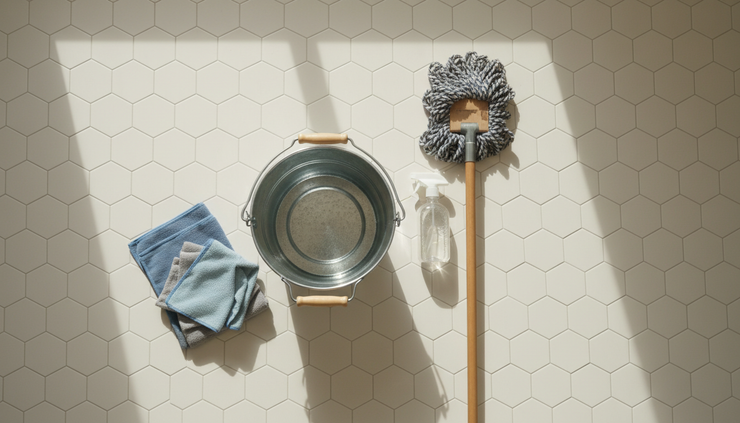
How to make your home look cleaner in 30 minutes
If you only have half an hour before guests arrive or before a cleaner comes, focus on the things that change the impression fastest.
Start with rubbish. Empty bins, remove food waste, and gather loose packaging. Bad smells and visible rubbish make a home feel less clean than almost anything else.
Next, clear the main surfaces. Kitchen worktops, the dining table, the coffee table, and bathroom counters carry the visual weight of a room. Put stray items into a basket if there is no time to sort them properly.
Then deal with floors. Vacuum or sweep the entrance, kitchen, living room, and bathroom. These are the areas people notice quickly and use most.
After that, wipe high-touch spots. Handles, switches, taps, and the toilet flush button take only minutes but make a home feel cared for.
Finish with scent and air. Open a window, remove damp towels, and make sure the kitchen bin is not the source of any lingering smell.
If a professional cleaner is arriving, leave a short note if needed. Mention priorities such as “please focus on the bathroom and kitchen” or “avoid the wooden sideboard”. Clear instructions prevent guesswork.
The real lesson from the first 30 seconds
Professional cleaners notice the things that affect time, access, hygiene, and the final result. They see the hallway, smell the air, scan the floors, check the kitchen and bathroom, and look for the details that daily life tends to hide.
The best way to use that knowledge is not to chase perfection. It is to focus on the areas with the biggest impact: entrances, surfaces, floors, smells, bathrooms, kitchens, and high-touch points.
A cleaner home often starts before the cleaning does. Clear what you can, remove what blocks access, and let the actual cleaning reach the places that need it most.


Comments